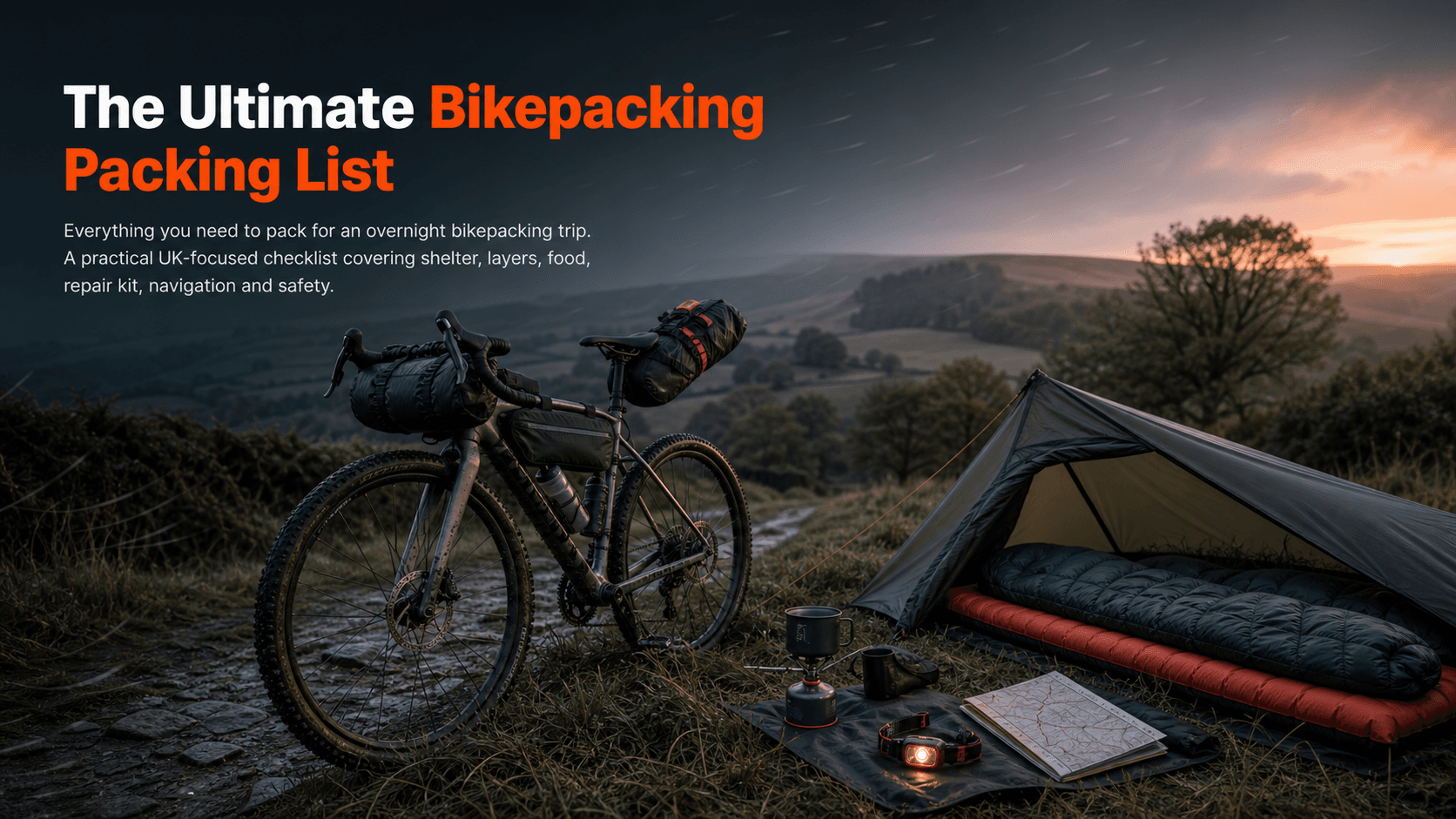
The Ultimate Bikepacking Packing List
Everything you need to pack for an overnight bikepacking trip. A practical UK-focused checklist covering shelter, layers, food, repair kit, navigation and safety.
You've planned your route. You've checked the distance, noted the elevation, maybe even uploaded the GPX to your head unit. But have you actually planned your night?
Packing for an overnighter is a different discipline to loading up for a day ride. Get it wrong and you're either hauling unnecessary weight uphill at midnight, or shivering in a bivvy bag that wasn't rated for a Scottish September. Get it right and the whole thing feels effortless, a fast-moving adventure with everything you need and nothing you don't.
This checklist covers the six essentials every overnight bikepacker needs to sort before leaving the driveway, plus guidance on where to stow it all and a printable list you can copy straight to your notes app.
The 6 things you must cover
Before we get into the detail, here's the shape of a solid overnight kit:
- Sleep system (shelter + sleeping bag + pad, matched to forecast temperature)
- Clothing layers (on-bike kit and off-bike comfort, separate and dry)
- Water and food (route-dependent capacity, not a generic figure)
- Bike repair kit (tools, tyre repair, spares appropriate to remoteness)
- Navigation and power (offline GPS, power bank, charging cables, lighting)
- Safety and first aid (wound care, pain relief, a comms plan)
Every item on your bike should map back to one of those six. If it doesn't, ask whether it earns its place.
1. Shelter and sleep system: choose from the forecast, not from habit
Your shelter decision is the biggest weight and bulk call you'll make. The right answer changes every trip.
- Bivvy bag only: fastest to set up, lightest, no poles, works anywhere flat. Fine on calm, dry nights. Miserable if condensation soaks your bag on a humid night.
- Tarp or fast-fly: low weight, good airflow, excellent in light rain. Requires decent pitching skills and trees or poles.
- Tent: heavier but the most reliable protection from wind and sustained rain. For a solo UK overnighter in spring or autumn, a one-person ultralight tent is usually worth the extra 400g.
- Hammock: only if your route passes through woodland you can actually use. Don't carry it on open moorland.
Whatever the shelter, pair it with a sleeping bag rated at least 5°C below the overnight low you're forecasting. On-bike effort keeps your core warm during the ride, but once you stop, your temperature drops fast. A sleeping pad matters too: ground insulation is measured by R-value, and anything below R2 will leave you cold on a British autumn night even in a warm bag.
Minimalist extras worth adding: a lightweight groundsheet to protect your pad and bag, and a stuff sack used as a pillow. That's it.
2. Clothing layers that actually work when the temperature drops
Keep your on-bike kit and off-bike camp kit completely separate. Your cycling kit will be damp with sweat by the time you stop. Dry clothes waiting in your seat pack make the transition from riding to camping immediately comfortable.
For UK overnighters, the layering logic is straightforward:
- Base layer: moisture-wicking merino or synthetic. This does the work of keeping you comfortable both on and off the bike.
- Mid layer: a packable insulated jacket (down or synthetic fill). Down packs smaller; synthetic insulates when wet. If your route is wet, go synthetic.
- Outer layer: a waterproof, windproof shell. Non-negotiable in the UK.
- Stopping layer: the jacket you reach for the moment you stop pedalling. Even a light fleece or packable gilet does more for morale than almost anything else in your bag.
Avoid cotton entirely, especially if conditions are cold and damp. Cotton holds moisture and can make mild nights feel dangerous. On a warm summer night it's fine; on a September hillside it's a liability.
For leg coverage, one pair of off-bike trousers (lightweight softshell or running tights) plus arm warmers and a buff covers most UK overnight temperature ranges without adding serious weight.
3. Water, electrolytes and fuel: plan for your route, not for a generic overnighter
Hydration planning is one area where generic advice falls apart quickly. BIKEPACKING.com recommends having the capacity for 2–6 litres of water storage as a baseline rule of thumb, but that range exists because trip conditions vary enormously. A 60km lowland route with a café or farm tap every 20km is nothing like a 40km moorland crossing with no resupply.
Before you pack:
- Map out where you can refill (streams, taps, petrol stations, pubs).
- Carry at least enough capacity to bridge your longest gap between sources, plus a buffer.
- If you're riding hard, add electrolytes. Plain water doesn't replace what you lose in sweat, and cramps at 2am on a remote descent are no fun.
For food, an overnight trip needs dinner and breakfast, plus enough snacks to fuel the evening ride in. Simple, high-calorie options that pack small work best: rice cakes, nut butter sachets, instant porridge, ramen noodles, a pack of tortillas with tinned fish. If you're cooking, a small canister stove adds warmth and morale to camp. If you're not, cold food is fine for one night and saves the weight.
The target isn't gourmet camping. It's eating enough to feel good at 7am when you ride home.
4. Bike repair kit: so you don't end the trip early
A broken bike in the middle of nowhere is just an expensive problem. Pack with remoteness in mind: the further from towns, the more spares you carry.
Tools and maintenance
As BIKEPACKING.com advises, your multi-tool must include all the Allen and Torx bits your bike actually requires. Check before you leave. Add a chain breaker and two or three master links (for your chain's speed), a small tube of chain lube, a spoke key and a few spare brake pads if your route is descend-heavy.
Tyre repair
For tubeless-equipped bikes, BIKEPACKING.com's recommended kit includes:
- Mini pump
- Tyre plugs (a range of sizes)
- Extra sealant (a small bottle or sachet)
- Spare tube or two (for failures plugs can't fix)
- Tyre levers
- Tyre boot (for sidewall cuts)
- Patch kit with rubber cement
- Curved needle and nylon thread (for stitching a torn sidewall on a really remote trip)
Running tubes-only? Drop the plugs and extra sealant, but carry at least two tubes, patches, levers and a pump.
Remoteness rule
One night on well-connected roads: minimum kit. One night on open trails miles from a bike shop: add a spare tyre folded under your seat pack, an extra tube and more sealant. The weight difference is small; the peace of mind is large.
5. Navigation, power and lighting: cover the night, not just the route
Navigation for a bikepacking trip means having your route offline, on a device that won't die. Your phone with a cached map and a saved GPX is a reasonable backup. A dedicated GPS head unit is better for navigation. Using both is sensible on a remote overnighter.
Paper isn't romantic, but a printed route description or an OS map section folded in a jersey pocket has saved many riders when screens fog or batteries fail.
Power
Carry a power bank and the cables for every device you're relying on: GPS, phone, lights. Calculate your overnight draw and make sure your bank covers it with margin. USB-C and Micro-USB on the same trip is a cable-management headache; sort it at home.
Lighting: on-road and at camp
These are two different problems.
Camp lighting: a head torch lets you set up a shelter in the dark, cook and pack up at 5am without waking anyone. Virtually weightless. Don't skip it.
On-road legal lighting (UK law): Under the Highway Code (Rule 60), your bike must have a white front light and a red rear light lit at night. It must also be fitted with a red rear reflector, and amber pedal reflectors if your bike was manufactured after 1 October 1985. Reflective ankle bands, a vest or a reflective jacket add meaningful visibility without adding measurable weight. Rule 59 also reminds you to avoid clothing that could snag in the chain or obscure those lights.
If you're arriving after dark or leaving before sunrise, treat the lighting requirement as non-negotiable. Not just legally, but for your own safety.
For route-specific light planning (knowing exactly when sunset hits which segment of your route), Tailwind GPS's route-by-hour scoring gives you a clear picture of conditions across your entire planned window.
6. Safety and first aid: small kit, big impact
NaTHNaC/TravelHealthPro states clearly that all travellers should carry a first aid kit, and that the contents should be tailored to the individual, the destination and the travel plans. For an overnight bikepacking trip, that means a compact kit focused on the injuries most likely to happen on a bike.
Core items:
- Plasters (assorted sizes) and blister care (compeed or equivalent)
- Sterile saline wipes or antiseptic
- A small roll of gauze bandage
- Medical tape
- Tweezers (for splinters, ticks and gravel)
- Pain relief (ibuprofen and paracetamol)
- Any personal prescription medication
Keep it in a small zip-lock bag or lightweight dry bag. 150g total is achievable.
Communications plan
If your route takes you out of mobile signal, consider who knows where you are and when you're expected back. A simple text to someone before you leave costs nothing. For remote multi-day routes, a satellite messenger (Garmin inReach mini, for example) adds proper emergency comms. For a one-night local overnighter, a clear plan shared with a contact is usually enough.
Packing by bike-bag zones: so you can actually reach what you need
The best packing system puts things where you'll need them, not just where they fit.
Handlebar roll or front bag: your sleeping system (bag, pad, shelter). These are the bulkiest items but they don't need to be accessed mid-ride. Keep them at the front where the weight is stable and away from your drivetrain.
Frame bag: dense, heavy items sit well here (repair kit, water bladder, food for the ride). Low and central is the best position for handling. Your snacks for the next hour go in an accessible pocket here.
Seat pack: clothing, camp kit and anything you'll reach at the end of the day. Keep it packed so it doesn't swing at the back. Use compression straps if it's a roll-style bag.
Top tube or stem bags: phone, snacks, small tools, chapstick, anything you want without stopping. Easy-reach only.
Generally: heavier and bulkier items go lower and forward; lighter items and anything you'll access frequently go where you can grab them without dismounting.
Overnight bikepacking checklist (copy this)
Sleep system
- Sleeping bag (rated for forecast overnight low, minus 5°C)
- Sleeping pad (R-value appropriate to season)
- Shelter (bivvy / tarp / tent, weather dependent)
- Lightweight groundsheet
- Optional: earplugs
Clothing
- Moisture-wicking base layer (spare, dry)
- Packable insulated mid layer
- Waterproof shell
- Off-bike trousers or tights
- Warm hat and gloves
- Stopping layer / fleece
- Spare socks
- Optional: camp shoes / flip-flops (weight vs comfort call)
Water and food
- Water bottles or hydration bladder (capacity matched to route resupply)
- Water filter or purification tablets (remote routes)
- Electrolyte tabs or sachets
- Dinner (instant, high-calorie)
- Breakfast (porridge sachets, bars, tortillas)
- Ride snacks (bars, gels, nut butter sachets)
- Stove, fuel canister and lighter (if cooking)
- Spork
- Optional: coffee / tea kit
Bike repair
- Multi-tool (with all required Allen/Torx bits)
- Chain breaker and master links
- Chain lube (small bottle)
- Mini pump
- Tyre plugs and extra sealant (tubeless)
- Spare tube(s)
- Tyre levers
- Tyre boot
- Patch kit
- Spoke key
- Optional: spare tyre (remote routes)
Navigation and power
- GPS head unit with route loaded
- Phone with offline map and GPX saved
- Power bank and charging cables
- Head torch and spare batteries
- White front light (legally lit)
- Red rear light (legally lit)
- Red rear reflector (legally fitted)
- Amber pedal reflectors (if applicable)
- Optional: paper map or printed route description
Safety and first aid
- Plasters (assorted) and blister care
- Antiseptic wipes or sterile saline
- Gauze and medical tape
- Tweezers
- Pain relief (ibuprofen + paracetamol)
- Personal medication
- Emergency contact plan (shared before departure)
- Optional: satellite messenger (remote / no-signal routes)
Pack for the weather window, not what you hope the weather will be
Every packing decision on this list has a weather dependency. Your shelter choice, your mid-layer, how much water you carry, whether you need full waterproofs or just a light shell, all of it is driven by what conditions you'll actually face, hour by hour, along your specific route.
That's where most overnight planners go wrong. They check a generic forecast the evening before and assume it tells them enough. It doesn't. A southwesterly at 20 km/h looks fine at home. On an exposed ridge at midnight heading northwest, it's a headwind and a cold one.
Tailwind GPS analyses weather along every segment of your actual route, hour by hour, so you can see exactly when the temperature drops, where the wind changes direction, and whether the rain is arriving before or after your planned camp spot. The Tailwind GPS route scoring map lets you compare departure windows and plan your overnight timing around the actual conditions on your specific loop, not just a pin on a town centre.
Set a route alert for your target score before you leave. If conditions shift, you'll know in time to adjust your layers or departure, not at the top of a pass at 11pm. For ideas on how the best cycling apps for planning rides based on the forecast fit together, that's a good place to dig deeper.
Pack for what's coming. Ride with confidence.
Plan overnight routes
See temperature, wind, and rain along every segment of your bikepacking loop.
Related posts
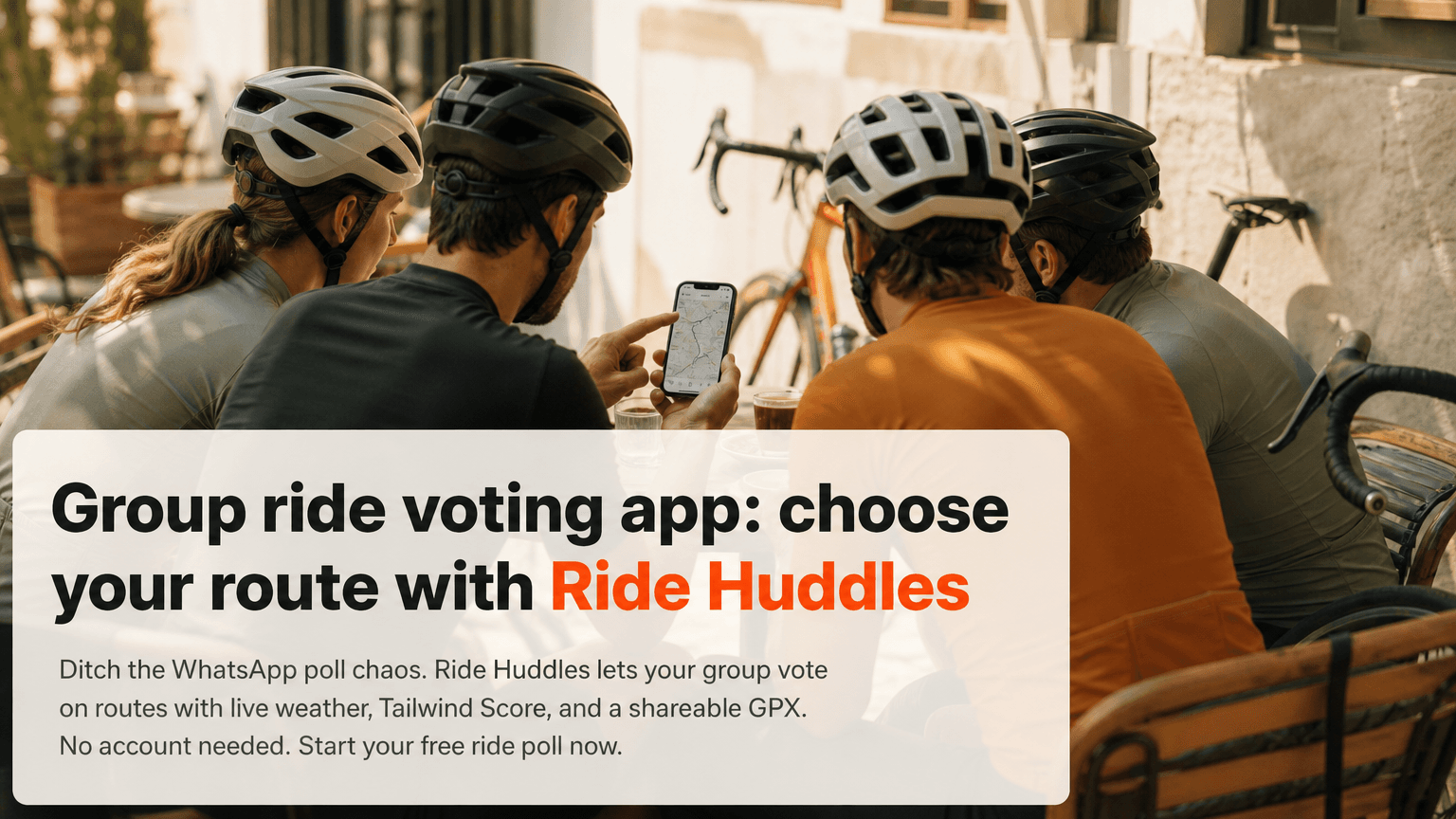
Introducing Ride Huddles: a simple way to choose your next group ride
Ride Huddle is a simple way for groups to choose a route together. Create a Huddle, add your routes, share one link, and let everyone vote — free, with no account required.
·2 min read
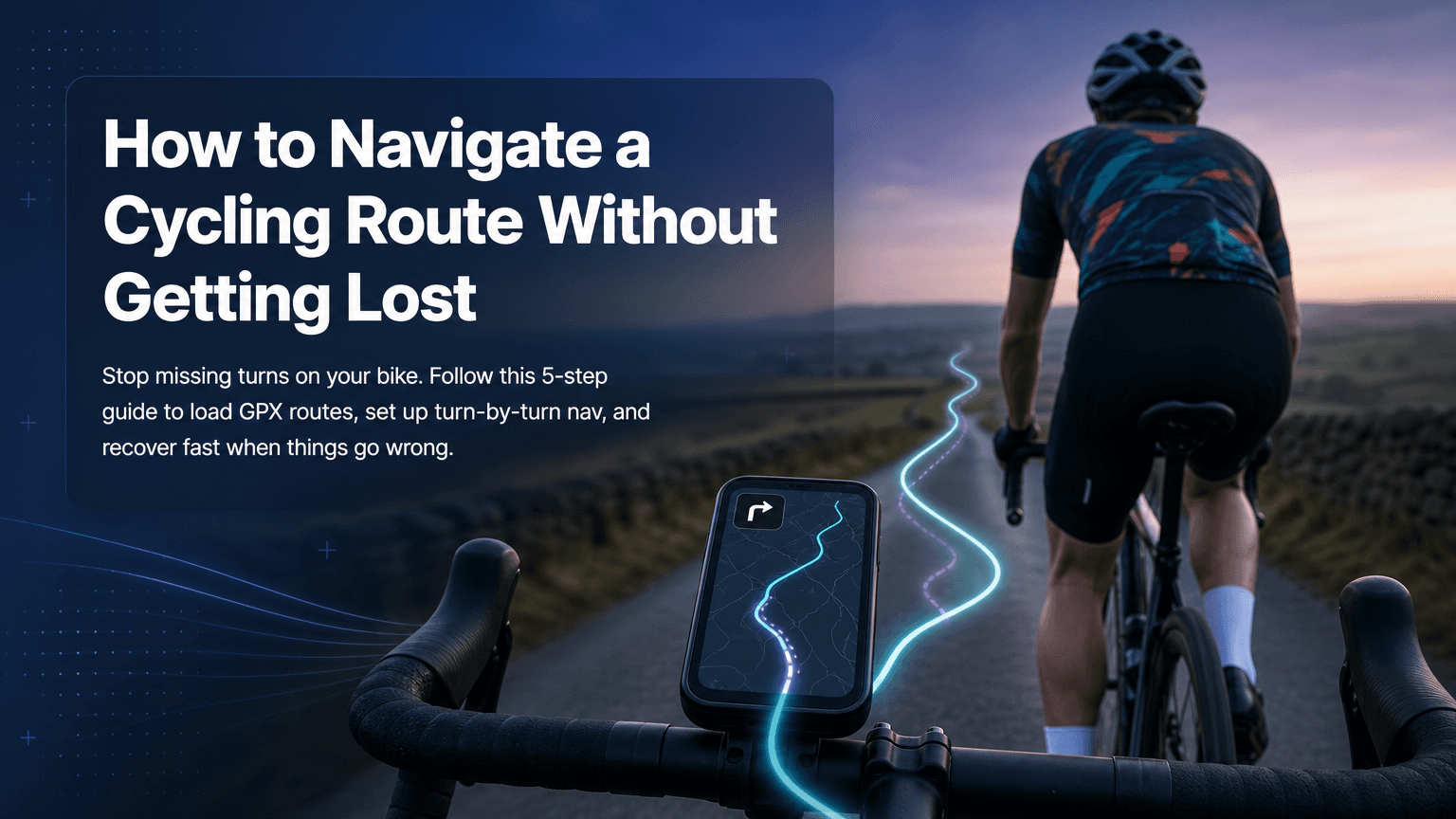
How to navigate a cycling route without getting lost
Stay on the line with in-browser turn-by-turn: voice prompts, navigate-to-start, and rerouting. Tailwind GPS is the phone navigation — export GPX only for a head unit.
·8 min read
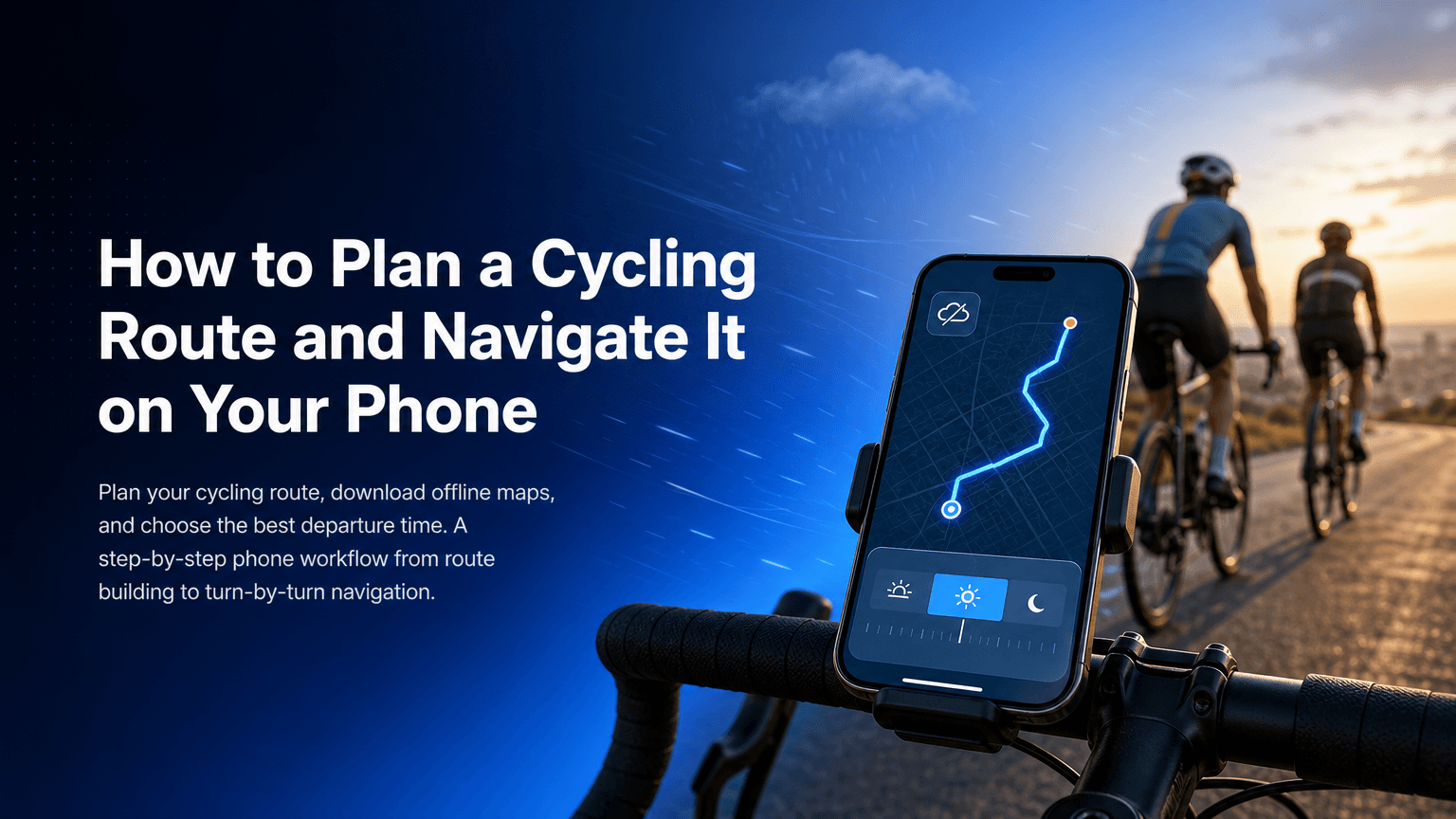
How to plan a cycling route and navigate it on your phone
Plan a cycling route on your phone, pick the best hour, then start in-browser turn-by-turn. Tailwind GPS includes voice prompts, navigate-to-start, and rerouting.
·6 min read